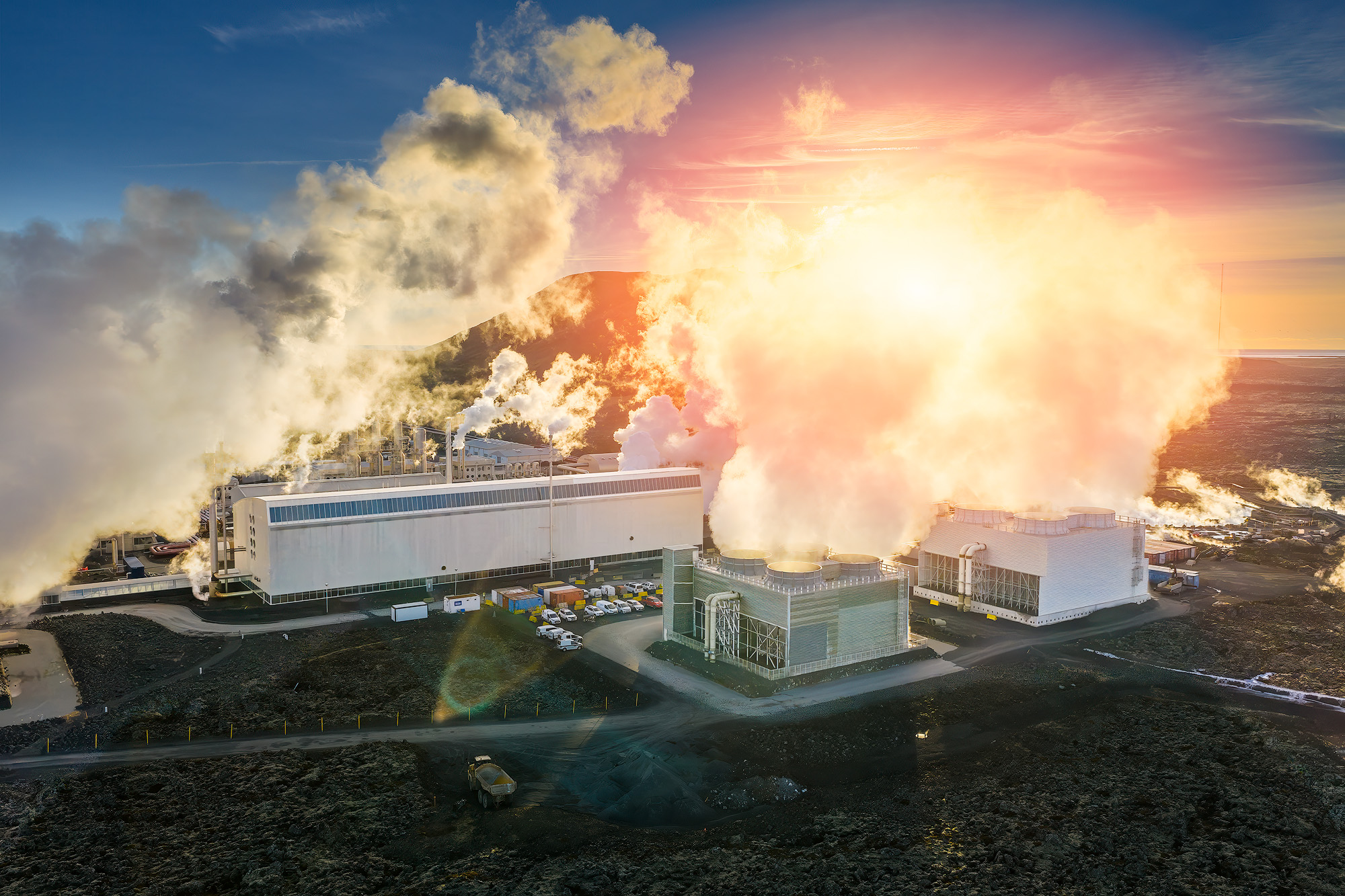
Ground was broken for the project at the end of 2022, and all work and schedule milestones were met despite continuous challenges posed by the natural forces on the Reykjanes Peninsula during construction. The total cost of the expansion and upgrades is expected to exceed ISK 14 billion.
Upgrades to Existing Equipment
Power Plant Seven replaces two of HS Orka’s older plants in Svartsengi and includes extensive upgrades to equipment related to the company’s hot water production. The expansion increases Svartsengi’s electricity generation capacity by up to one‑third, bringing total output to approximately 63 MW.
Tómas Már Sigurðsson, CEO of HS Orka, expressed his satisfaction with this major milestone, which marks an important step in the company’s continued development:
“Given the natural disasters that have affected the Reykjanes area during the construction period, completing Iceland’s newest power plant on schedule is an extraordinary achievement. Everyone involved — contractors, consultants, and HS Orka staff — deserves great credit.”
Nine Eruptions During Construction
Seismic activity and eruptions along the Sundhnúkur crater row, which began in earnest on 10 November 2023, had a significant impact on the project. The area experienced nine eruptions during the construction period, and repeated gas pollution caused further disruptions.
The construction site was closed for nearly four months, from November 2023 to March 2024. Despite these challenges, the project was completed on schedule thanks to coordinated efforts and resourcefulness from everyone involved. Close cooperation with civil protection authorities and emergency responders was also crucial.
Ístak, Rafal and HD as Main Contractors
Three main contractors led the project: Ístak handled construction work as well as safety and site coordination; Rafal was responsible for electrical installations; and HD oversaw mechanical installations.
Numerous other contractors and subcontractors contributed to the project. The plant’s design was carried out by Verkís and OG Architects; Strendingur managed construction and project oversight; Lota programmed the control system; and Ellert Skúlason ehf. handled earthworks. The turbine and generator were supplied by Fuji in Japan, whose specialists spent the year in Iceland overseeing installation and commissioning.
At peak times, up to 120 HS Orka employees and contractors worked on site each day — making evacuations due to volcanic activity and gas pollution particularly complex.
Potential for Further Expansion
The National Planning Agency concluded that the expansion did not require a full environmental impact assessment. Based on this, HS Orka applied in 2022 for a new utilization and power plant license for up to 85 MW of production. The installed capacity in Svartsengi therefore allows for further expansion, provided the sustainability of the geothermal resource is maintained.
A Power Plant Built in Seven Phases
The Svartsengi power plant is Iceland’s first combined geothermal plant, producing both electricity and hot water. It was originally built by Hitaveita Suðurnesja, the predecessor of HS Orka. Geothermal production began in 1976, and the plant was expanded in six phases over more than three decades. The seventh phase has now been completed and brought online.